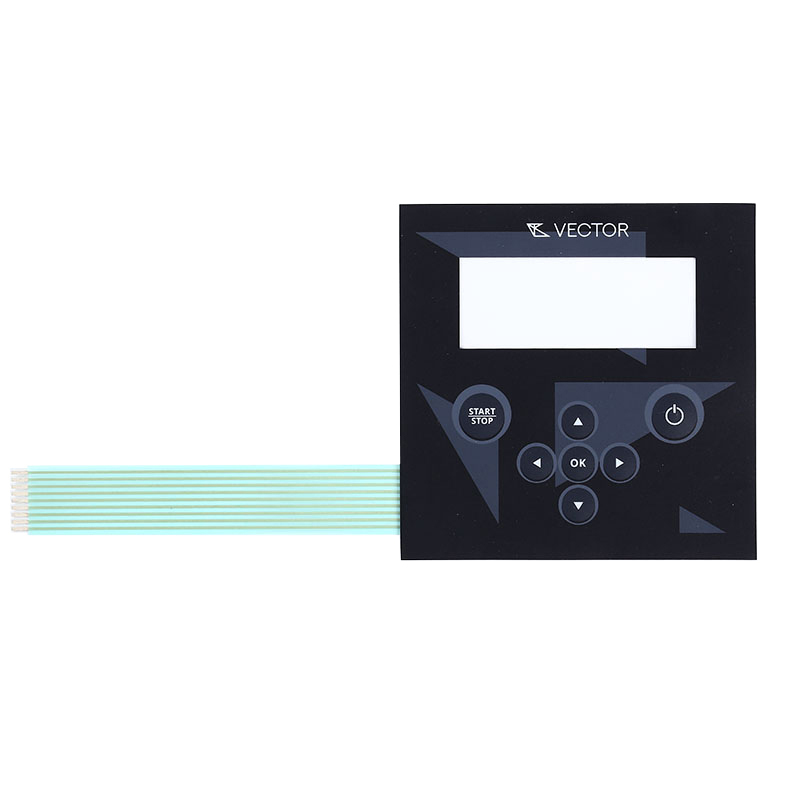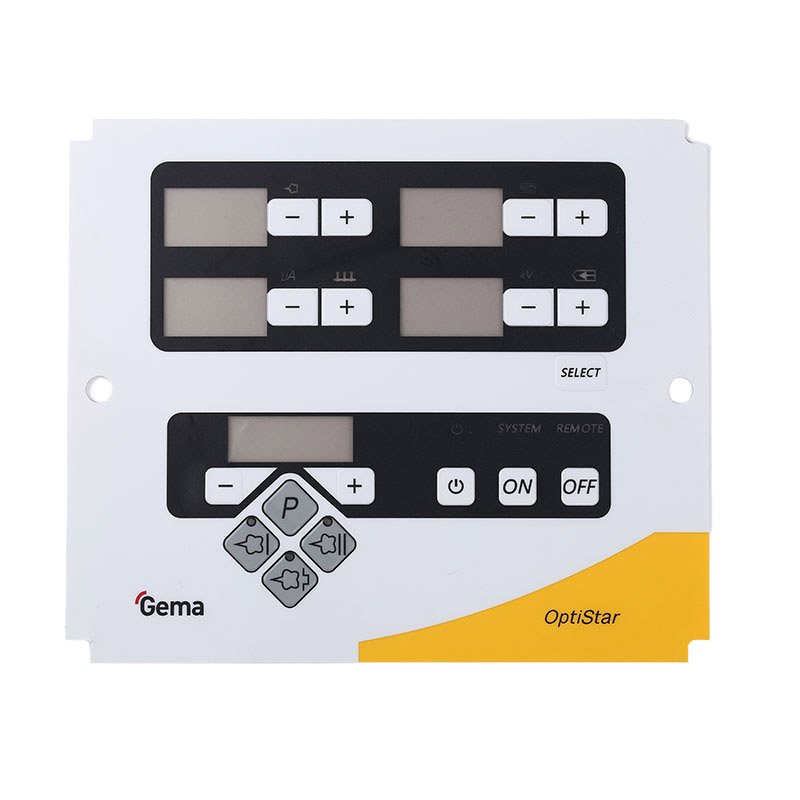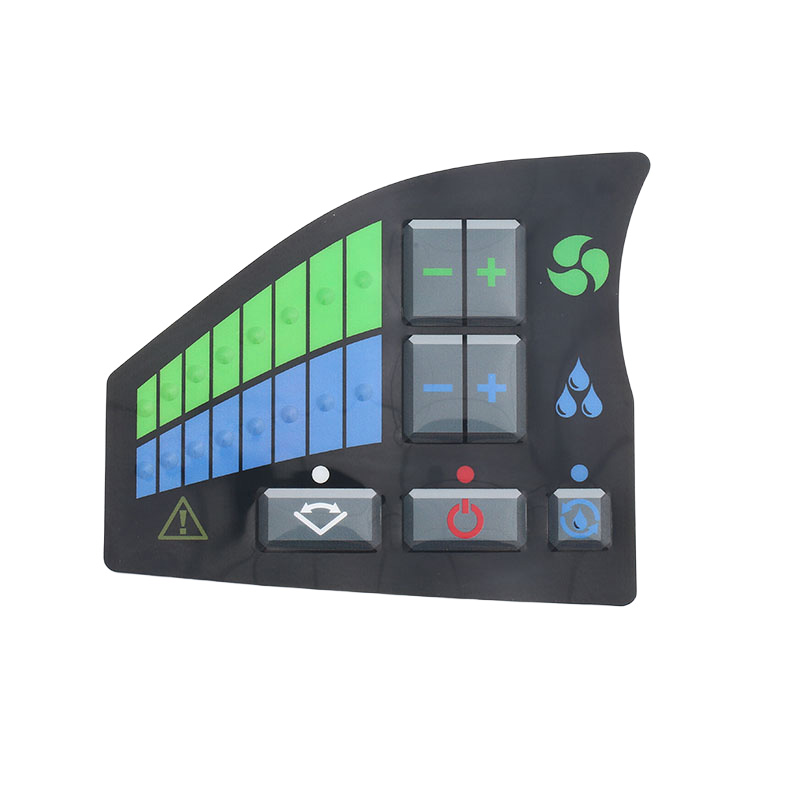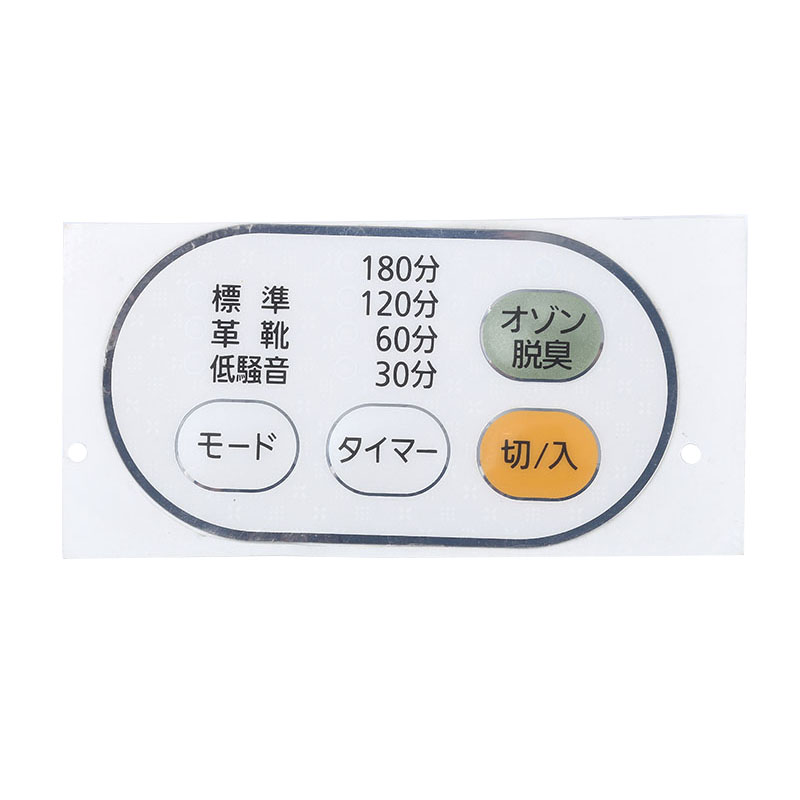
Flush Control Membrane Switches
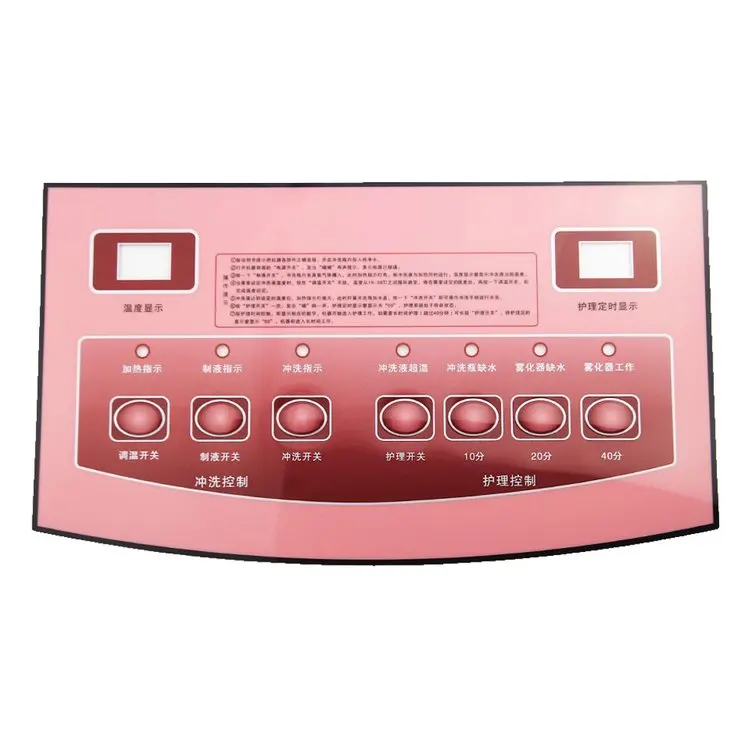
Flush Control Membrane Switches are integrated membrane switches incorporating flush function control. As core electronic components within human-machine interface systems, they are primarily employed in appliances requiring button-activated flush operations (such as washing machines, dishwashers, cleaning equipment, and water treatment systems). These switches combine operational convenience with sealing protection and extended service life.
Working Principle
The operational logic of the flush control membrane switch is based on circuit closure triggering. Its core structure comprises multiple layers including the panel, upper circuit, isolation layer, lower circuit, and base adhesive. The specific process is as follows:
Normally Open: When not pressed, the upper and lower circuits are separated by the isolation layer, with contacts in an open state. The device does not execute a flush action.
Pressure-activated conduction: Upon pressing the relevant flush button (e.g., ‘Start Flush’), the panel deforms the upper circuit contacts downward. These contacts penetrate the isolation layer's through-holes to make contact with the lower circuit plates, establishing electrical conduction.
Signal triggering: The conductive circuit transmits an electrical signal to the device's main control system, initiating the pre-programmed flush sequence (e.g., timed flush, pressure-controlled flush, etc.).
Flush Control Membrane Switches Advantage
1. Beautiful appearance: It can be designed in various shapes, colors, and patterns, with good decorative properties, which can enhance the appearance quality of the product.
2. Lightweight and flexible: With a thin thickness and light weight, it has good flexibility and can adapt to installation needs of different shapes and spaces.
3. Good sealing: It can effectively prevent dust, water vapor, etc. from entering the interior, providing good protection for the internal circuit.
4. Easy to operate: The button touch is comfortable, the operation is sensitive, and the response is fast.
5. Low cost: Compared to other types of switches, its production process is relatively simple and the cost is relatively economical.
6. Strong durability: It has certain wear and corrosion resistance, and a long service life.
Flushing control membrane switch application
Domestic Appliances: Washing machines (drainage and rinse control), dishwashers (spray rinse mode switching), water purifiers (filter backwash triggering), rice cookers (cleaning mode control), etc., leveraging their waterproof properties to mitigate electrocution risks in damp environments;
Industrial Equipment: Water treatment systems (membrane filter backwash control), cleaning robots (high-pressure wash activation), production line cleaning equipment (spray activation), etc., withstanding dust and oil contamination in industrial settings;