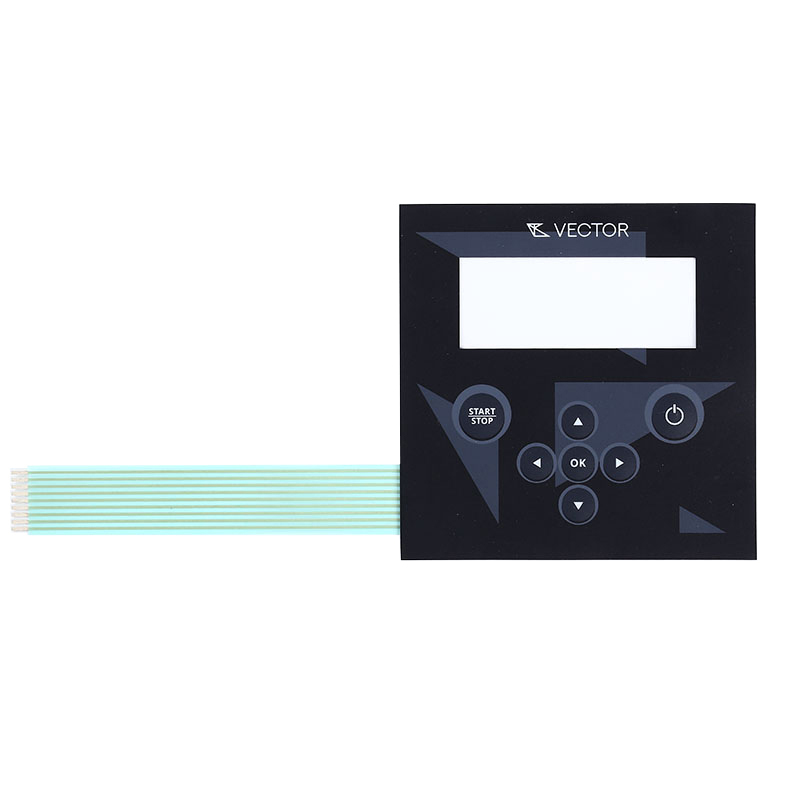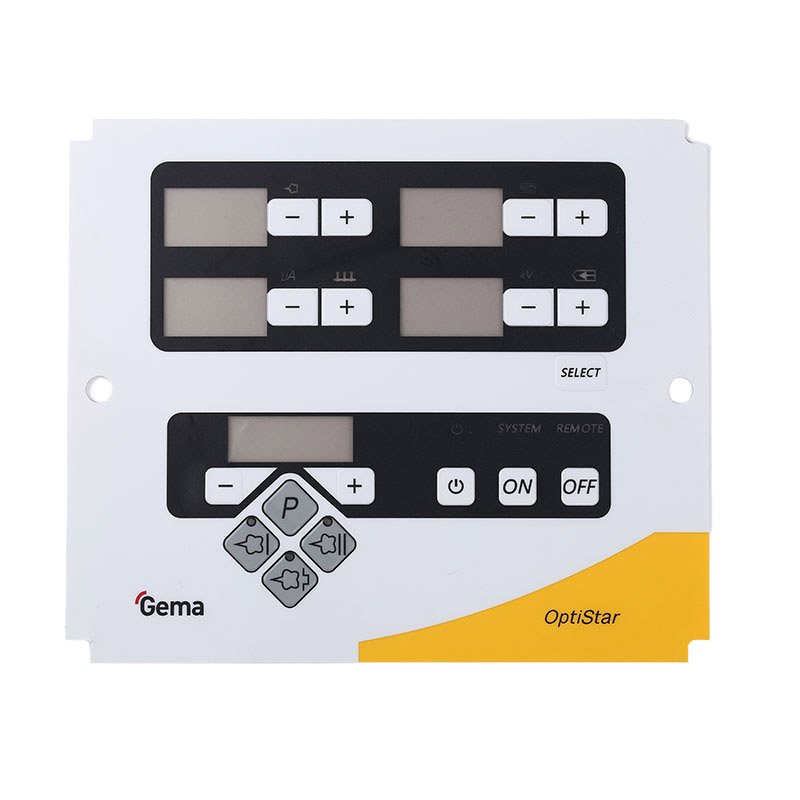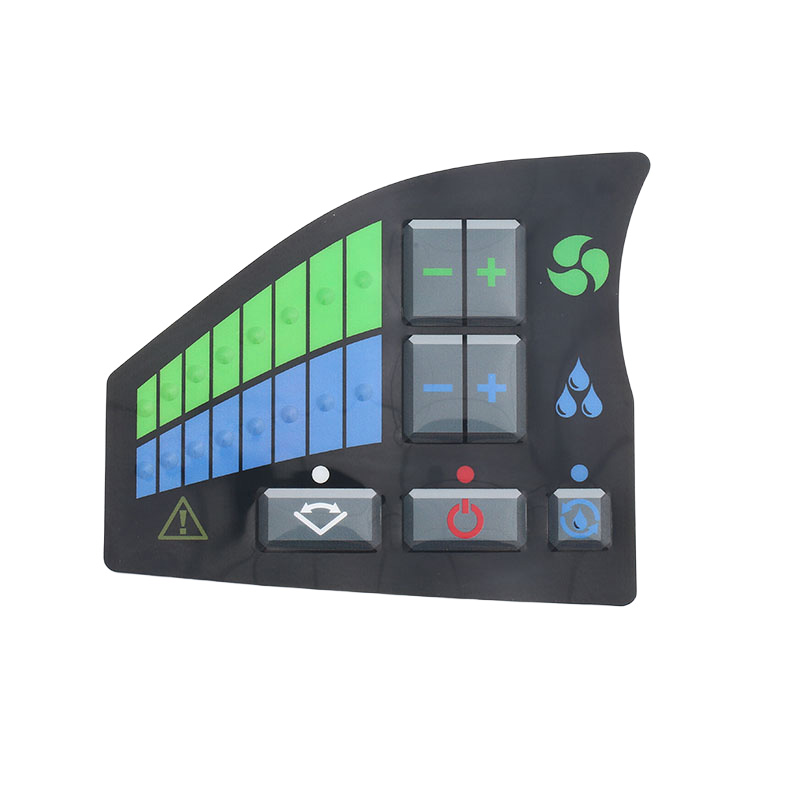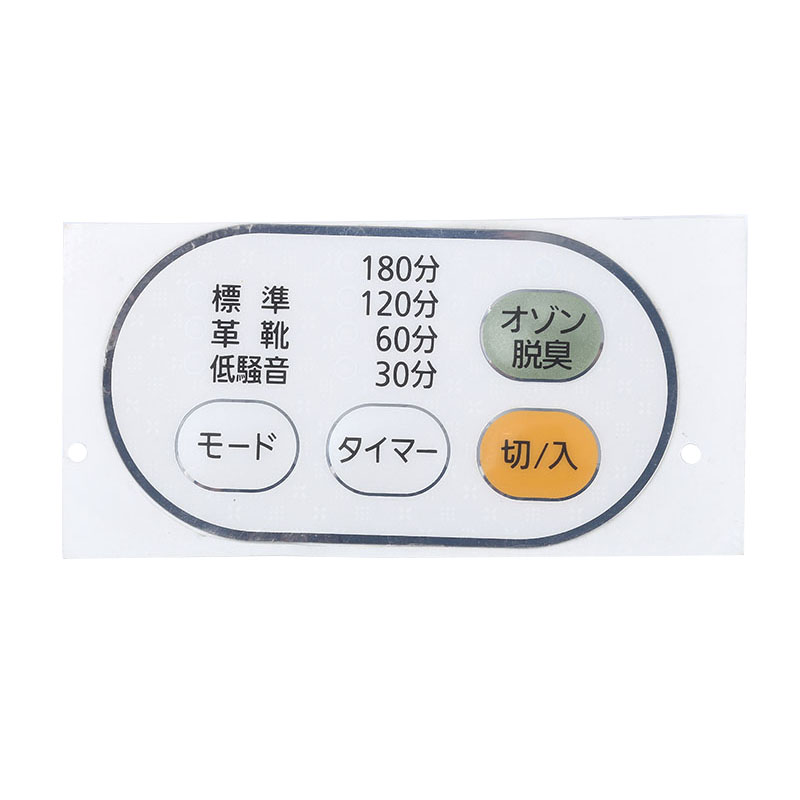
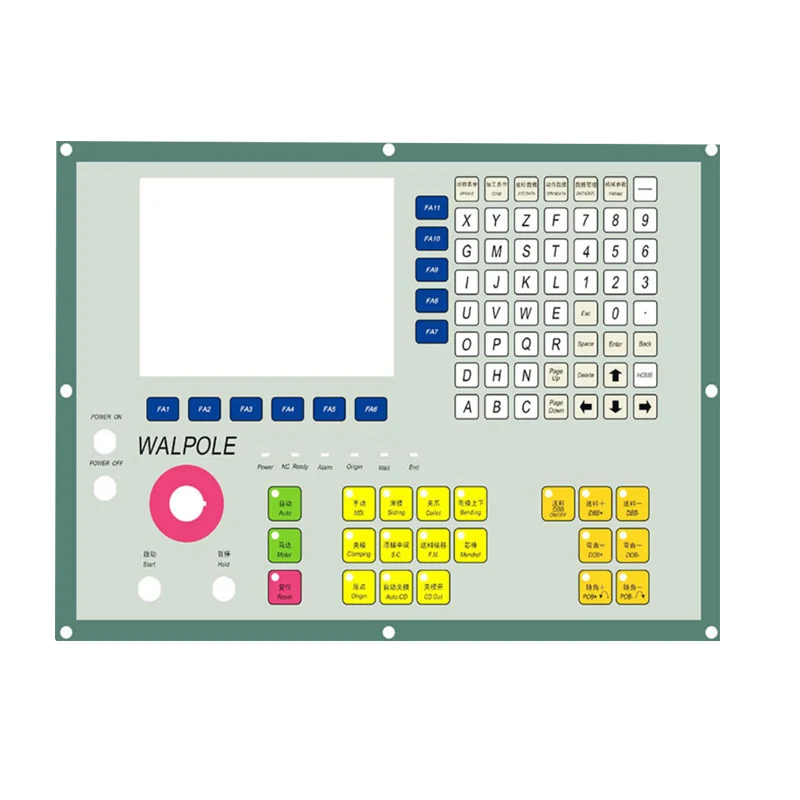
Membrane Switch Panel With Window
| Brand Name | HM |
| Type | Graphics Overlay |
| Application | Telecommunication Equipment |
| Surface | glossy or matte |
| Button | Tactile & Non-tactile |
| Color | Customized Color |
| Waterproof grade | IP65-IP67 |
| service life | > 1 million times |
| Printing | Silkscreen Printing |
| Certification | ISO9001:2015 / ROHS |
| Adhesive | 3M Adhesive |
Graphics Overlay is a customized decorative surface layer used for membrane switches, control panels, or human-machine interfaces (HMI). Typically constructed with multi-layer composite materials, it combines both visual indicators (legends/icons) and functional protection. This component finds wide applications across industrial equipment, medical devices, consumer electronics, and other fields.
Membrane Switch Panel With Window Key Features
Characterised by its lightweight and flexible properties, typically measuring 0.1–0.5mm in thickness, making it suitable for compact devices; its sealed construction achieves an IP67 protection rating, offering resistance to water, dust and oil, and adapting to diverse harsh industrial environments; capable of withstanding millions of presses, ensuring a long service life; furthermore, it supports customisation in shape, colour and backlight design, delivering strong adaptability to meet varied industrial control requirements.
Primary Types
Flat Non-tactile Type: Long lifespan, low cost, but no feedback.
Raised Tactile Type: Provides distinct tactile feedback through embossed structures, facilitating blind operation.
Metal Dome Type: Crisp tactile response, stable conductivity, lifespan of approximately 1 million cycles.
Industrial Control Membrane Switch Applications
Automated production lines: On assembly line controllers and PLC operator panels, enabling operations such as starting/stopping motors, conveyor belts and robotic arms, as well as adjusting their speeds.
CNC machine tools: Serving as input components for machine tool operator panels, used to select machining modes and set critical parameters such as rotational speed and feed rate.
Robotic control: On industrial robot control cabinet panels, facilitating functions including emergency stop, reset, and manual/automatic mode switching.
Test and Measurement Instruments: Panels on devices such as oscilloscopes, signal generators, and multimeters for switching measurement ranges and selecting test modes.
Industrial Metrology Instruments: On display control units of flow meters, pressure gauges, and level indicators for parameter calibration, unit conversion, and data reset.
Medical Diagnostic Equipment: Employed in certain industrial-grade medical instruments (e.g., industrial microbiological analysers), requiring dustproofing and easy-to-clean properties.
Outdoor Industrial Equipment: Such as operation panels for photovoltaic inverters and wind turbine control cabinets, capable of withstanding rain, dust, and UV degradation.
Chemical/Metallurgical Equipment: Utilised on reactor controllers in chemical plants and temperature regulation panels in metallurgical facilities, resistant to corrosive gases and high-temperature environments.
Marine/Railway Equipment: Utilised in ship navigation consoles and railway vehicle control units, these panels adapt to complex operating conditions including vibration and humidity fluctuations.
Industrial power supply equipment: On the control panels of uninterruptible power supplies (UPS) and DC power supplies, used for switching on/off and adjusting voltage and current.