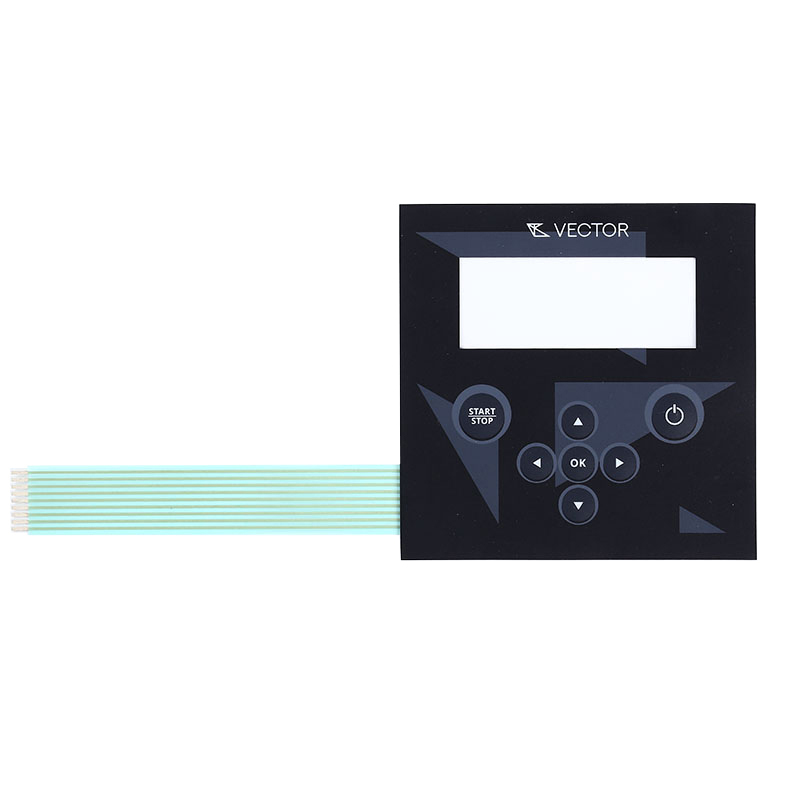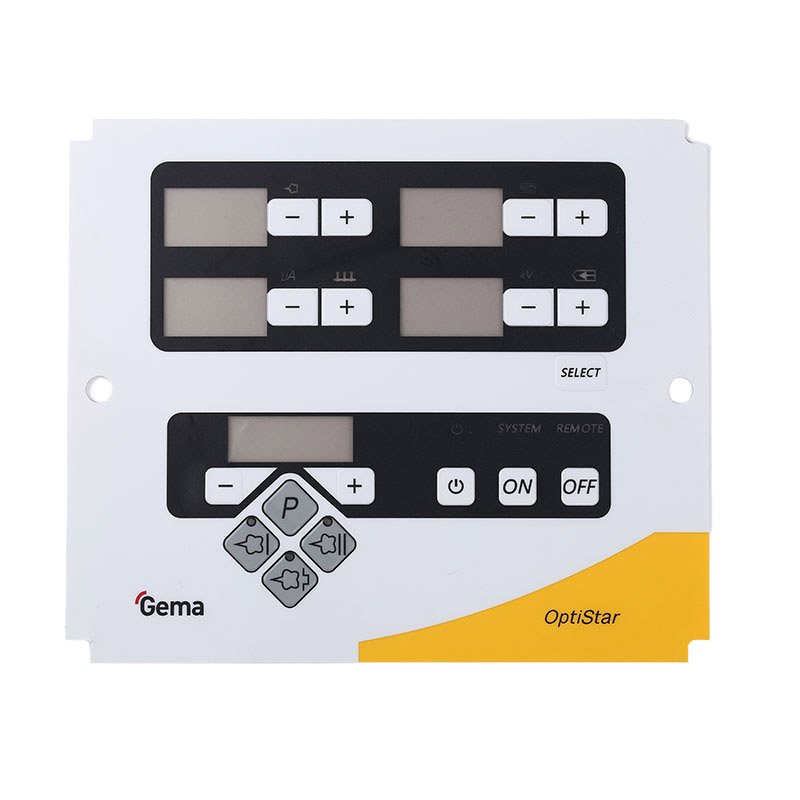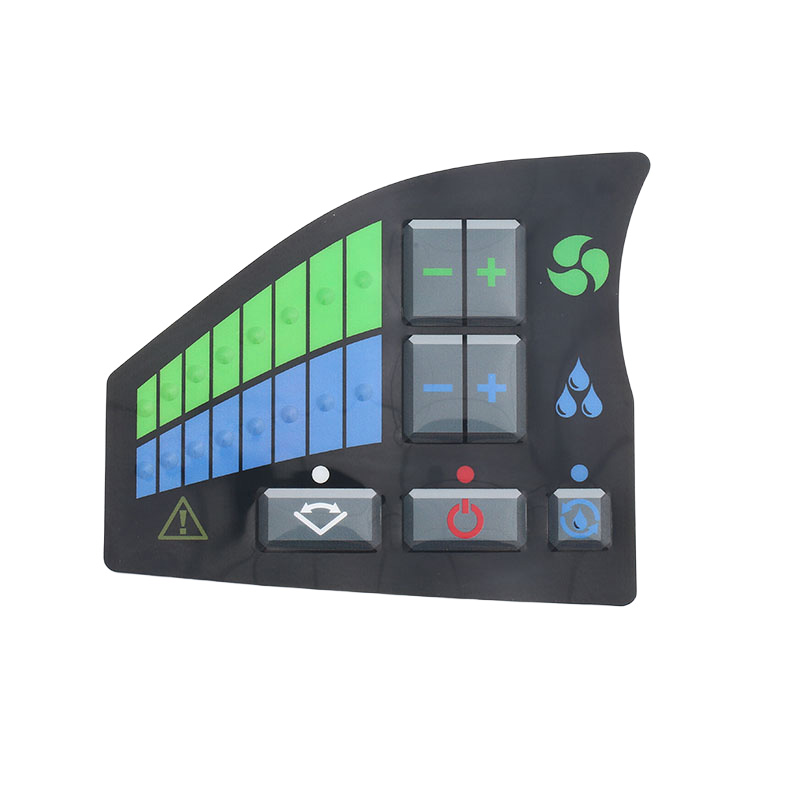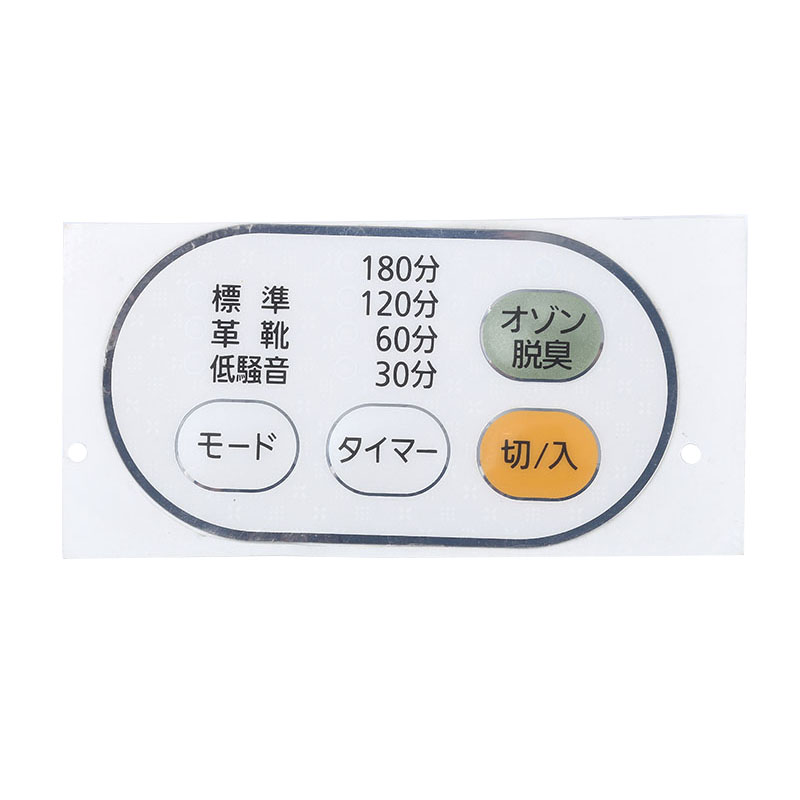
PCB Membrane Switch Panel
- HM
- Dongguan China
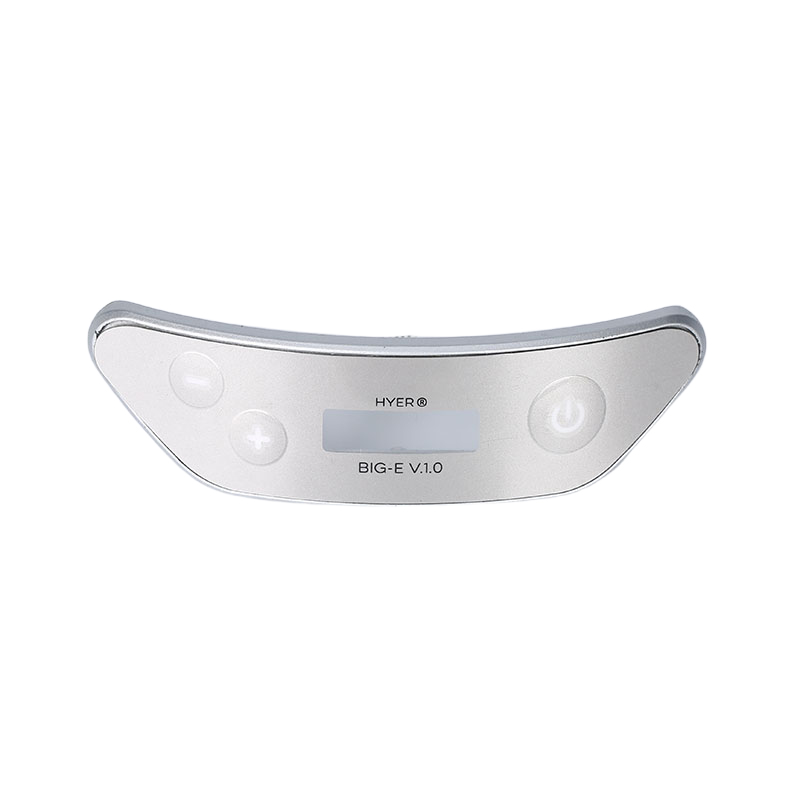
| Brand Name | HM |
| Type | Graphics Overlay |
| Application | Telecommunication Equipment |
| Surface | glossy or matte |
| Button | Tactile & Non-tactile |
| Color | Customized Color |
| Waterproof grade | IP65-IP67 |
| service life | > 1 million times |
| Printing | Silkscreen Printing |
| Certification | ISO9001:2015 / ROHS |
| Adhesive | 3M Adhesive |
PCB Membrane Switch Panel Performance characteristics:
Waterproof, dustproof, and oil resistant: PCB film switches can effectively prevent the intrusion of moisture, dust, and grease, ensuring long-term stable use
Long lifespan: Due to the use of high-quality materials and processes, the service life of PCB film switches can usually reach more than three years, and can even withstand up to one million button operations
Good sealing: By using different materials and technologies, the membrane switch can be made waterproof, oil resistant, pollution resistant, anti-static, and resistant to high and low temperatures
Low cost: Compared to other types of switches, PCB film switches have lower manufacturing costs and are suitable for large-scale production and application
PCB Membrane Switch Panel Classification
By tactile feedback: Can be categorised into flat non-tactile type, film convex tactile type, raised bezel non-tactile type, raised bezel tactile type, embossed panel tactile type, and metal dome type.
By illumination function: Can be categorised into standard type and illuminated type. Illuminated membrane switch panels require a bottom mould to be opened, with LED circuits capable of being integrated onto the same layer or a different layer as the underlying circuitry.
PCB Membrane Switch Panel application:
CNC machine control panel, control panel for electrocardiograph, blood glucose meter, blood pressure monitoring equipment, hard buttons on car dashboard, center console function switches, power system control panel, solar inverter operation interface
How to select the appropriate PCB membrane switch panel?
Standard indoor environments (e.g., household appliances, office equipment): Standard polyester (PET) or polycarbonate (PC) panels suffice, with an IP40 protection rating.
Damp/greasy environments (e.g., kitchen appliances, industrial washers): High-seal structures are mandatory. Prioritise oil-resistant PC panels, with an IP65 or higher protection rating to prevent liquid ingress into circuitry.
Outdoor/high-temperature environments (e.g., vehicle-mounted equipment, outdoor detectors): Panels must possess UV resistance and high-temperature tolerance. PET with anti-UV coating may be selected, whilst circuit layers must withstand temperatures from -40°C to 85°C or higher to prevent thermal failure.
Medical settings (e.g., patient monitors, infusion pumps): Panel materials must comply with medical-grade standards (e.g., FDA certification), withstand alcohol-based disinfection wipes, and utilise non-toxic, non-volatile printing inks. Antimicrobial properties are advantageous.