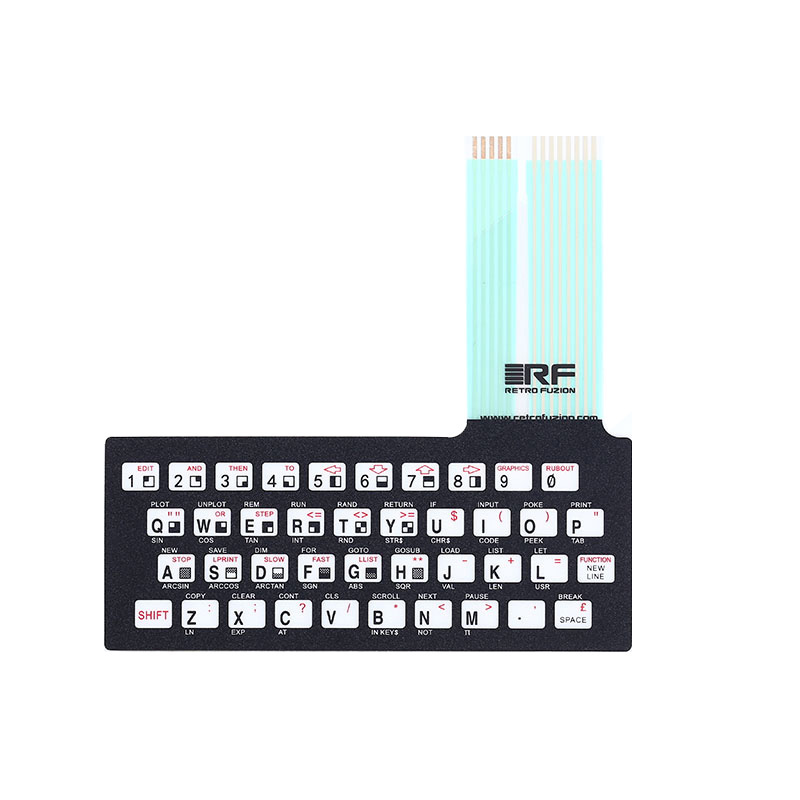
Tactile Flexible Membrane Keypad
- HM
- Dongguan China
| Brand Name | HM |
| Type | Membrane Switch |
| Application | Telecommunication Equipment |
| Keypad Button Material | Other |
| Product name | Control panel overlay |
| Thickness | 0.175mm to 2.0mm usually according to different material |
| Finish | Glossy, matte, texture, etc |
| Ahesive | Backside adhesive or not |
| Printing | Silkscreen printing, digital printing, UV printing |
| Material | PET PC PVC PMMA Glass |
Membrane switches combine the lightweight, flexible and sealed characteristics of thin films with a distinct, tactile pressing sensation provided by their specialised structure.
Tactile Flexible Membrane Keypad switches are widely used in industrial and consumer fields due to their advantages of ultra-thin structure, strong sealing, and controllable cost.
The operational sequence of a Tactile Membrane Switches keypad is as follows:
1. Unpressed state: The metal spring leaf, resembling an inverted small bowl, supports the upper circuit layer, maintaining isolation from the lower circuit layer and keeping the circuit open.
2. Pressing process: Finger pressure causes the panel layer and upper circuit layer to deform downward, compressing the metal spring leaf.
3. Critical Point and Tactile Feedback: Upon reaching a specific pressure threshold, the metal spring leaf undergoes sudden elastic deformation (buckling). The raised dome-shaped structure abruptly flattens or inverts with a distinct ‘snap’. This instantaneous, rapid deformation transmits through the key to your fingertip, producing a pronounced ‘click’ sensation or tactile feedback, accompanied by a crisp audible sound (not absolutely silent).
4. Circuit Closure: At the instant the spring leaf flattens, the upper and lower circuit contacts attached to its base or corresponding positions make contact, completing the circuit.
5. Rebound Reset: Upon releasing pressure, the metal spring leaf rapidly returns to its original dome shape via its inherent elasticity. This action pushes the upper circuit layer back into place, breaking the circuit and delivering a tactile rebound sensation.
Characteristics of flexible membrane switch keypad
Beautiful and innovative appearance
Small size and light weight
Moisture proof, dust-proof, and oil proof
Strong sealing, acid and alkali resistance
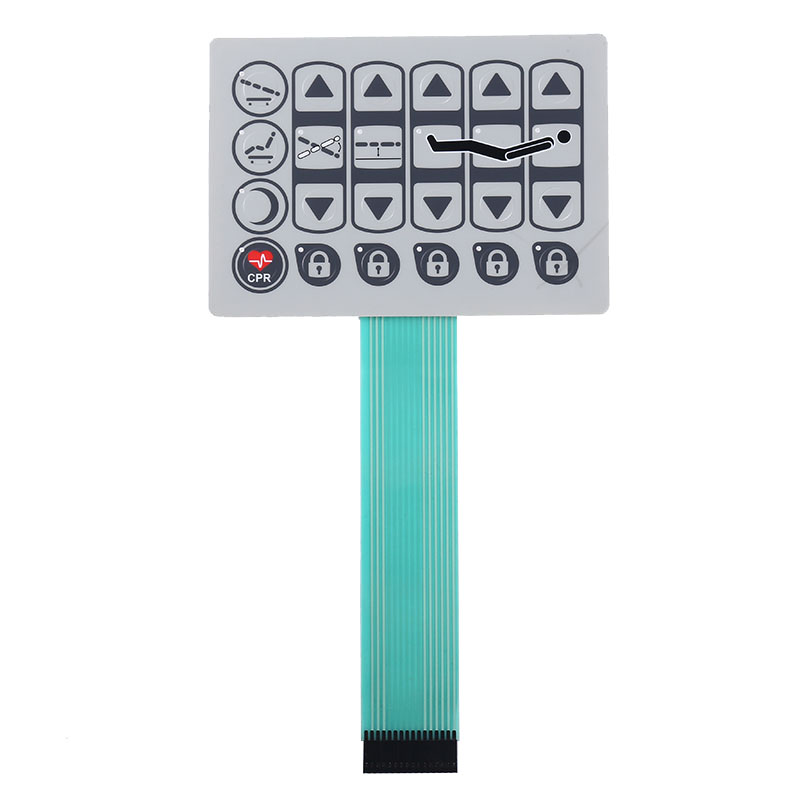
Applied to surgical table control panel, monitor buttons, excavator control panel, ship control panel, home appliance control panel, game controller, car center console.
Our membrane switches can be classified based on structure, function, and manufacturing process:
(1) Classification by structure
Flat-panel membrane switches
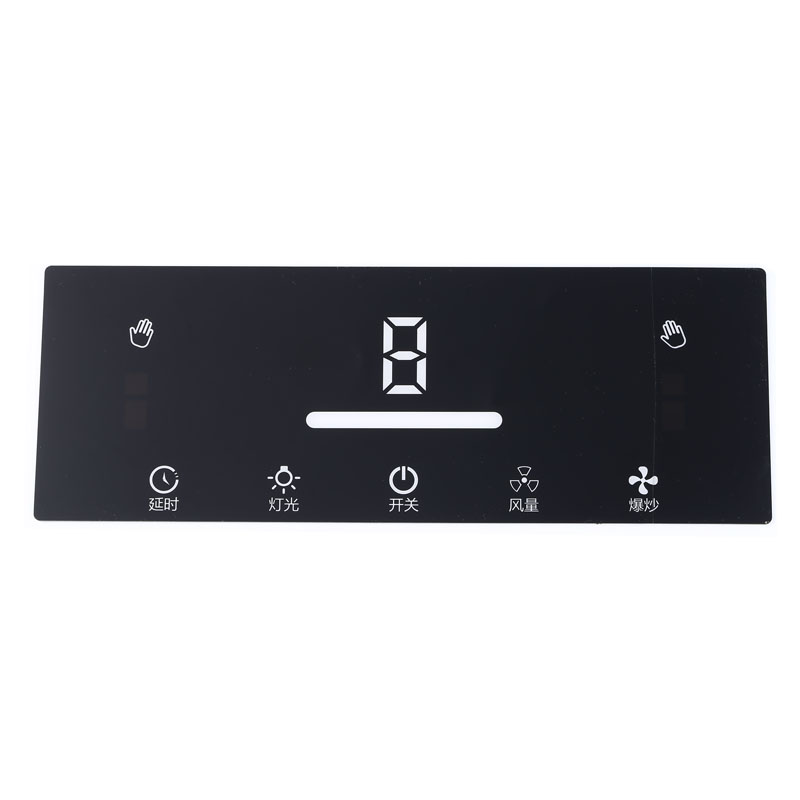
No raised buttons on the surface, with a smooth and flat overall design, offering strong aesthetic appeal, suitable for minimalist design scenarios (e.g., appliance panels).
Light tactile feedback with weak force response, requiring printed patterns to distinguish button areas.
Dome-type (3D) thin-film switches
Key areas are formed into raised domes via die-cutting, providing clear tactile feedback and facilitating blind operation.
The raised structure enhances operational feel but involves complex production processes and higher costs.
(2) Classification by circuit type
Membrane key switches
These switches only have key functions and transmit switch signals through circuit conduction (e.g., function keys on electronic devices).
Membrane panel switches
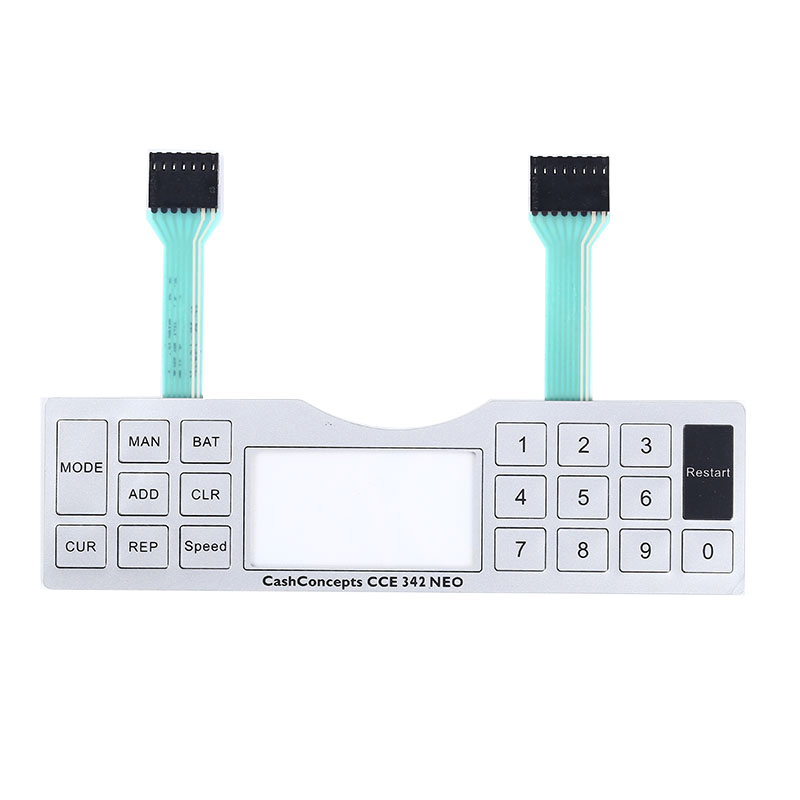
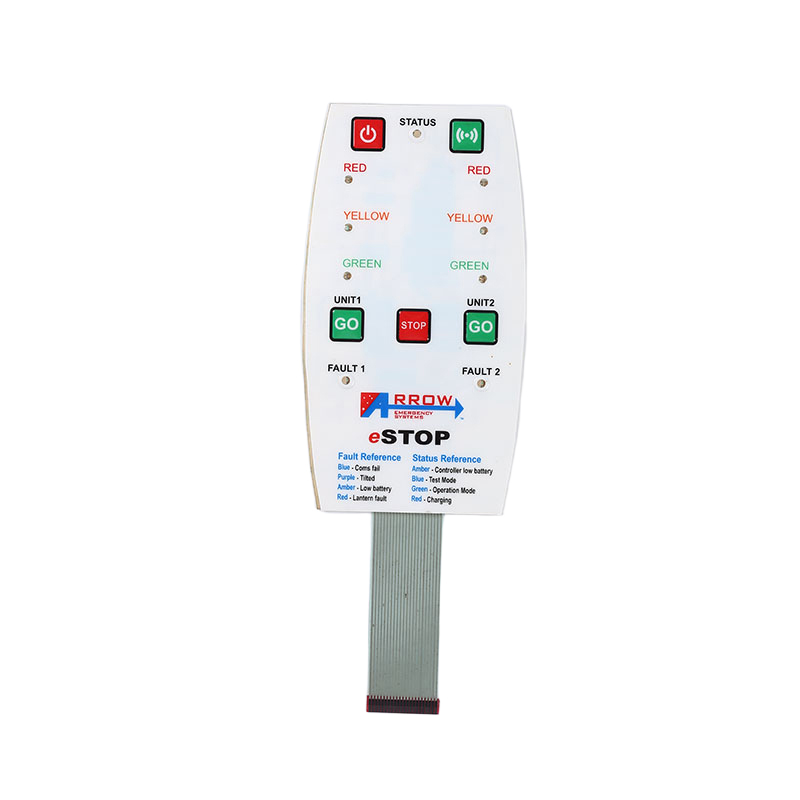
These switches integrate key and display functions (e.g., LED indicator lights, LCD windows), and the panel can be printed with text and graphics for human-machine interface applications (e.g., medical devices, industrial instruments).
(3) Classification by connection method
Flexible printed circuit board (FPC) connection type
Connected to the main control board via FPC ribbon cables, suitable for complex circuits or flexible applications (e.g., handheld devices).